Non-Verbal Communication in Video Calls: Key to Professional Success in Panama
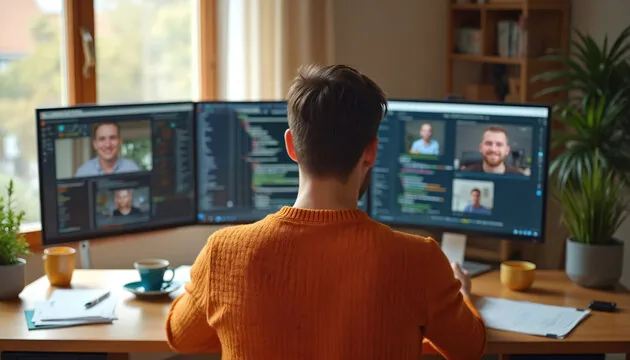
In Panama's current working environment, the office has shifted from a physical place to a grid on a screen. However, even if we are remote, our bodies still speak for us. In a video call, 55% of our message's effectiveness depends on non-verbal cues that, if not managed correctly, can work against us.
At Crezendo, we know that technical talent is not enough. That's why our corporate training and professional development programs place special emphasis on virtual non-verbal communication—an indispensable skill for leaders and collaborators in the digital age.
Why Does Body Language Matter More Through a Camera?
In person, we have the full context of the other person's body and the environment. In a video call, the listener only has access to a small box. This creates several challenges:
- Zoom Fatigue: The brain has to work harder to process fragmented non-verbal signals, leading to exhaustion.
- Loss of Eye Contact: We tend to look at the screen, not the camera. To the viewer, this is interpreted as a lack of connection or disinterest.
- Misinterpretation: A neutral gesture in person can look like boredom or anger on a screen if not compensated by other signals.
Key Elements to Master Your Virtual Presence
To project professionalism and build trust from Panama to the rest of the world, pay attention to these four pillars:
1. Virtual Eye Contact
The trick is simple but hard to execute: look at the camera, not the person's face on the screen. By looking at the lens, the other person feels you are speaking directly into their eyes. This is fundamental for negotiations and job interviews.
2. Using Your Hands
If your hands are under the table or out of frame, you lose a powerful tool for emphasizing ideas. Try to keep your hands visible occasionally to demonstrate honesty and dynamism. A head nod or a thumbs-up can be more effective than interrupting the audio to say "I agree."
3. Posture and Energy
Being too close to the camera invades virtual personal space, while being too far away makes you look small and withdrawn. Keep your back straight and a distance that allows your shoulders and part of your chest to be seen. This projects an energy of alertness and participation.
4. The Environment as an Extension of Your Message
Your background, lighting, and noise are not just technical; they are part of your non-verbal communication. A tidy, well-lit space communicates respect for the other person's time and mental order.
Develop Your Soft Skills with Crezendo
Many professionals in Panama have an impeccable technical resume but fail to communicate their value in remote environments. At Crezendo, we offer practical workshops where we record and analyze your interactions to help you:
- Eliminate gestural filler.
- Align your tone of voice with your body language.
- Master virtual assertiveness in distributed teams.
Do you want your team to stand out in every virtual meeting? Communication is a muscle that needs training. Contact us today to learn about our soft skills and effective communication workshops for companies and professionals in Panama. Don't let the screen be a barrier to your professional growth.